Published April 24, 2024 | Written by: Justin Lee | Edited by: Ryan Boe
How AI is Transforming Industries
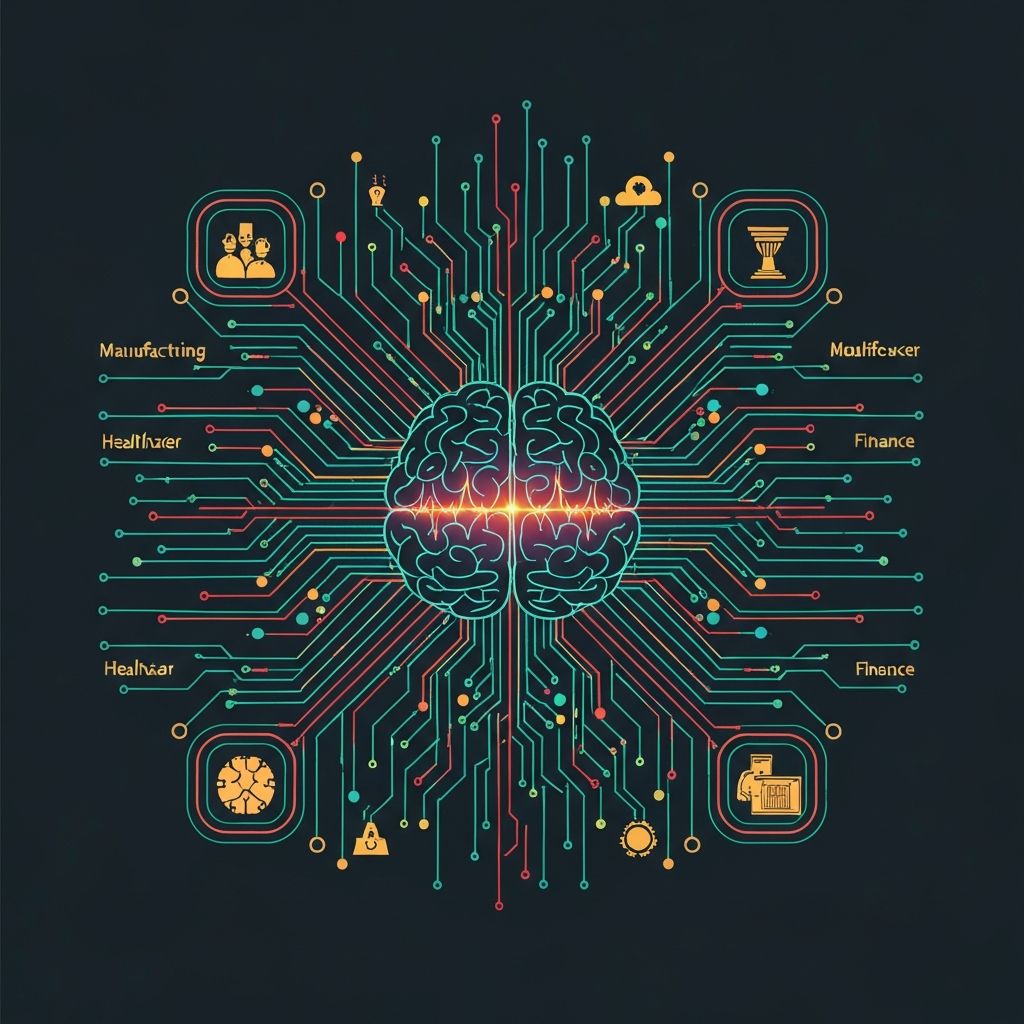
Artificial Intelligence has evolved from a futuristic concept to a transformative force reshaping every major industry. From healthcare to finance, manufacturing to retail, AI technologies are driving unprecedented efficiency, innovation, and competitive advantage. This comprehensive analysis explores how AI is revolutionizing the business landscape and what it means for the future of work.
The AI Revolution in Healthcare
Healthcare has emerged as one of the most promising frontiers for AI application. Machine learning algorithms are now capable of detecting diseases earlier and more accurately than traditional methods. AI-powered diagnostic tools can analyze medical images, identifying cancerous tumors, cardiovascular abnormalities, and neurological conditions with remarkable precision.
Beyond diagnostics, AI is revolutionizing drug discovery and development. What once took years and billions of dollars can now be accelerated through AI-driven molecular modeling and predictive analytics. Pharmaceutical companies are using AI to identify potential drug candidates, predict their efficacy, and optimize clinical trial designs, potentially saving millions of lives through faster access to life-saving treatments.
Financial Services Transformation
The financial sector has embraced AI with remarkable enthusiasm, deploying it across fraud detection, risk assessment, algorithmic trading, and customer service. AI-powered systems can analyze millions of transactions in real-time, identifying suspicious patterns and preventing fraudulent activities before they cause significant damage.
Robo-advisors are democratizing wealth management, providing personalized investment advice to individuals who previously couldn't afford traditional financial advisors. These AI systems analyze market trends, assess risk tolerance, and automatically rebalance portfolios, making sophisticated investment strategies accessible to everyone.
Manufacturing and Industry 4.0
Smart factories powered by AI are redefining manufacturing efficiency. Predictive maintenance systems use machine learning to anticipate equipment failures before they occur, reducing downtime and maintenance costs by up to 40%. AI-driven quality control systems can detect defects with superhuman accuracy, ensuring consistent product quality while reducing waste.
Supply chain optimization has reached new heights through AI analytics. Companies can now predict demand fluctuations, optimize inventory levels, and route shipments more efficiently. This level of optimization not only reduces costs but also minimizes environmental impact through reduced waste and more efficient logistics.
Retail and E-Commerce Innovation
AI has transformed the retail experience from browsing to checkout. Personalization engines analyze customer behavior, preferences, and purchase history to deliver tailored product recommendations that significantly increase conversion rates. Virtual shopping assistants powered by natural language processing provide 24/7 customer support, answering questions and guiding purchases with human-like understanding.
Dynamic pricing algorithms adjust prices in real-time based on demand, competition, and inventory levels, maximizing revenue while remaining competitive. Computer vision technology enables cashier-less stores where customers can simply walk in, pick up items, and leave, with AI automatically detecting and charging for their purchases.
Transportation and Autonomous Vehicles
The transportation industry is undergoing a fundamental transformation driven by AI. Autonomous vehicles are no longer science fiction but an emerging reality, with AI systems capable of navigating complex traffic scenarios, predicting pedestrian behavior, and making split-second decisions to ensure passenger safety.
Beyond self-driving cars, AI is optimizing traffic flow in smart cities, reducing congestion and emissions. Logistics companies use AI to optimize delivery routes, predict maintenance needs, and improve fuel efficiency across their fleets, resulting in significant cost savings and environmental benefits.
Education and Personalized Learning
AI is revolutionizing education through personalized learning experiences that adapt to each student's pace, learning style, and knowledge gaps. Intelligent tutoring systems provide one-on-one instruction at scale, offering immediate feedback and customized practice problems that target specific areas where students need improvement.
Automated grading systems free educators from time-consuming administrative tasks, allowing them to focus on mentorship and creative teaching. AI-powered analytics help identify students at risk of falling behind, enabling early intervention and support that can dramatically improve educational outcomes.
Challenges and Ethical Considerations
While AI's transformative potential is undeniable, it also raises important ethical and practical challenges. Bias in AI systems can perpetuate and amplify existing societal inequalities if not carefully addressed. Privacy concerns arise as AI systems collect and analyze vast amounts of personal data. Job displacement remains a significant concern as automation replaces certain roles, though it also creates new opportunities in AI development, maintenance, and oversight.
Organizations must prioritize responsible AI development, ensuring transparency, fairness, and accountability in their AI systems. This includes diverse development teams, rigorous testing for bias, clear data governance policies, and ongoing monitoring of AI system performance and impact.
The Future of AI in Industry
As AI technology continues to advance, its impact on industries will only deepen. We're moving toward a future where AI doesn't just assist human workers but collaborates with them, augmenting human capabilities and enabling us to solve problems previously thought impossible. The key to success will be finding the right balance between automation and human judgment, efficiency and ethics, innovation and responsibility.
Industries that embrace AI thoughtfully and strategically will gain significant competitive advantages, while those that resist or mismanage AI adoption risk being left behind. The AI revolution is not coming—it's already here, and it's transforming industries in ways we're only beginning to understand.